Frequently Asked Questions 

Common show terms and questions, answered.

Common Show Terms and What They Mean

  • Turnout - refers to the overall presentation of both horse and rider/handler. Horses should be presented clean and as is correct for their breed standard, and riders should wear the appropriate attire for their class and breed of horse.
  • Conformation - the physical, structural, and skeletal makeup of a horse, accounting for their proportions, angles, and bone structure. Key components of conformation include balance, structure, muscle tone, angles, soundness and overall shape in accordance with breed standard. Confirmation is always taken into account in classes.
  • In-hand Classes - the horse is shown from the ground. The handler will be expected to lead the horse in a controlled manner to showcase its type, conformation, movement/way of going, and manners.
  • Ridden Classes - these classes involve the rider being mounted. The horse is judged under saddle, focusing on way of going, conformation, manners and suitability for the specific class type.
  • Exhibitor - An owner, or other person responsible for a pony at a show.

Abbrevations

BHS - British Horse Society
M&M - Mountain and Moorland
SHP - Show Hunter Pony
SP - Show Pony
WHP - Working Hunter Pony
WH - Working Hunter
NNP - Non Native Pony
N/C/T - Native/Cob/Traditional
ROR - Retraining of Racehorses
LR - Lead Rein
FR - First Ridden
TGCA - Traditional Gypsy Cob Association
SSADL - Senior Showing and Dressage Ltd
TSR - The Showing Register

Our shows cater for a variety of classes

Frequently Asked Questions

Do I wear a Tweed or Navy/Black Jacket?

Tweed jackets are correct for mountain and moorland/welsh ponies, hunter horses or ponies, native/traditional/hogged cobs, and working hunter classes. A navy or black jacket is typically used for show horses or ponies, riding horses, and hacks. Local level showing is generally more lenient, you can rarely go wrong with a well-fitted tweed jacket if this is all you have. A general rule of thumb - leather browband = tweed jacket, coloured browband = navy/black jacket.

What should I Wear for In-Hand Classes?

What you wear depends on the class, but in general, you should aim for a smart and professional appearance. Your horse should also be turned out to a high standard.

● Tweed or Black/Navy jacket/waistcoat - dependent on the horses type.
● Shirt and tie.
● Smart fitted trousers or chinos in a colour that contrasts with your horses legs (e.g. light trousers for dark legs).
● Short, smart jodhpur boots that allow for running.
● Bowler, fedora, or flat cap are commonly worn by adults, while a fully harnessed riding hat should be worn by children or when required for safety with young or unpredictable horses.
● Brown or black gloves are recommended although not compulsory for in-hand.
● Short showing cane or in-hand whip.
● Hair should be tidy and tied back if long, preferably in a hairnet.
● Jewellery should be removed.

How Do I Turn My Horse/Pony Out for In-Hand?

Your horse should be clean, groomed and turned out according to their breed and class type - you are encouraged to look into the correct presentation for your individual horse prior to competing.

● Mountain and Moorlands, Traditional and Native Cobs, Welsh Horses and Ponies are to be shown in their natural state.
● Hunter Horses and Ponies, Hacks, Show Horses and Ponies, Non-Natives, RORs and Sport Horses should be shown plaited and trimmed. Quarter marks can be done as correct to how the horse is turned out.
● Some foreign breeds are to be turned out as correct to their individual breed standard (e.g. Shire horses are presented with manes plaited with “flights” woven into them).
● Horses should be presented with clean, shiny coats, free of any mud or stains, and with well trimmed and oiled or polished hooves.
● Horses should wear a clean and well fitted bridle or show halter.
● Stallions to be bitted when taken off trailer or box and should wear visible stallion discs on their bridle.

Should my Horse Wear a Bridle or Halter for In-hand Showing?

Whether your horse should wear a bridle or headcollar depends on their age and type - it is recommended you look into the recommended turnout as per your horses breed standards.

● Youngstock (1, 2 and 3 year old's) - usually shown in a leather halter/filly slip (leather bridle without a bit), a white show halter, or an in-hand showing bridle with a rubber or simple snaffle.
● Foals - a white show halter or a leather foal slip and must not be bitted.
● Stallions/Colts (2 years and over) - must always be shown in a bridle with a bit for safety. A chain lead is often recommended for additional control.
● Adult Horses/Ponies (4 years and over) - generally wear an inhand bridle with a snaffle bit or their ridden show bridle with a snaffle or pelham/double.
● Native Ponies (M&M’s, Welsh Breeds, Native or Traditional Cobs) - mares/fillies are often shown in white rope halters or leather filly slips, though bridles are permitted to be worn. Geldings are more commonly shown in in-hand or ridden bridles though Welsh A, C, D, Native and Traditional Cob Geldings are permitted to wear white show halters.
● Hunter Horses/Ponies - Plain leather in-hand or ridden show bridle.
● Show Horses/Ponies, Hacks, Riding Horses - leather in-hand or ridden show bridle usually completed with a smart coloured browband.

What should I Wear for Ridden Showing Classes?

What you wear depends on the class, but in general, you should aim for a smart and professional appearance. Your horse should also be turned out to a high standard.

● Tweed or Black/Navy jacket - dependent on the horses type.
● Shirt and tie.
● Light coloured jodhpurs/breeches (usually beige, fawn, cream or canary).
● Long black or brown boots are standard for adults. Short boots are standard for junior riders, as well as adults riding small breed M&Ms, or show ponies / show hunter ponies not exceeding 148/143cm. Jodhpur clips or elasticated jodhpurs should be used when wearing short boots.
● Correctly secured Skull Caps/Riding Hats (PAS015 2011, VG1, (BS) EN1384 2023, ASTM F1163 2015 and 2023, SNELL E2016 and E2021 onwards, AS/NZS 3838 2006 onwards) MUST be worn by riders at all times when mounted. Hats should have a plain cover, either Black, Navy Blue, Brown, Grey or Green.
● Brown or black gloves are standard though gloves can be navy, canary or cream.
● Short showing cane.
● Hair should be tied back, preferably in a hairnet.
● Jewellery should be removed.

What should I Wear as a Leader in Lead Rein Showing Classes?

Leaders in lead rein classes should wear smart attire that compliments the riders jacket and the pony.

● Tweed or Black/Navy jacket, waistcoat or leaders dress - depending on the horses type.
● Shirt and tie to match the riders outfit or lead rein blouse or silk scarf under the jacket.
● Tailored trousers, a skirt and tights, or culottes with tights in muted colours such as navy, black or beige.
● Bowler, fedora, or flat caps to be worn by adult leaders. Leaders under 16 must wear a fully harnessed riding hat.
● Comfortable, smart shoes or black/brown short leather boots.
● Brown or black gloves are standard though gloves can be navy, canary or cream.
● Hair should be neat and tied back.

How to Turn my Horse/Pony Out for Ridden Showing Classes?

Your horse should be clean, groomed and turned out according to their breed and class type - you are encouraged to look into the correct presentation for your individual horse prior to competing.

● Mountain and Moorlands, Traditional and Native Cobs, Welsh Horses and Ponies are to be shown in their natural state.
● Hunter Horses and Ponies, Hacks, Show Horses and Ponies, Non-Natives, RORs and Sport Horses should be shown plaited and trimmed. Quarter marks can be done as correct to how the horse is turned out.
● Some foreign breeds are to be turned out as correct to their individual breed standard (e.g. Shire horses are presented with manes plaited with “flights” woven into them).
● Horses should be presented with clean, shiny coats, free of any mud or stains, and with well trimmed and oiled or polished hooves.
● Horses should wear a clean and well fitted bridle with a cavesson noseband and saddle with a plain brown or black discrete saddle shaped numnah.
● Show horses/ponies, hacks, and riding horses bridles are usually completed with a smart coloured browband.
● Double bridles/pelhams may be worn for ridden classes except in novice, lead rein/first ridden, or equitation classes where a snaffle bridle must be worn.
● Stallions to be bitted when taken off trailer or box and should wear visible stallion discs on their bridle.
● No boots or leg protection is permitted in ridden showing classes. This includes the use of over reach boots.

What Breeds are Small and Large Mountain and Moorlands?

● Small Mountain & Moorland Breeds - Shetland, Exmoor, Dartmoor, Welsh Section A and Welsh Section B.
● Large Mountain & Moorland Breeds - Connemara, Highland, Dales, Fell, New Forest, Welsh Section C and Welsh Section D.

What is a First Ridden Class?

First ridden is a class designed to introduce young riders (usually 12 and under) to compete off the lead rein, bridging the gap between lead rein and open showing classes. Ponies must typically be 128cm or under, safe, and well mannered. Combinations will perform a walk and trot together followed by individual shows where canter can be optional.

What should I Wear for Working Hunter Classes?

● Tweed jacket.
● Shirt and tie.
● Light coloured jodhpurs/breeches (usually beige, fawn, cream or canary).
● Long black or brown boots are standard for adults. Short boots are standard for junior riders, as well as adults riding small breed M&Ms, or show ponies/show hunter ponies not exceeding 148/143cm. Jodhpur clips or elasticated jodhpurs should be used when wearing short boots.
● Correctly secured Skull Caps/Riding Hats (PAS015 2011, VG1, (BS) EN1384 2023, ASTM F1163 2015 and 2023, SNELL E2016 and E2021 onwards, AS/NZS 3838 2006 onwards) MUST be worn by riders at all times when mounted. Hats should have a plain cover, either Black, Navy Blue, Brown, Grey or Green.
● Body protectors (BETA Level 3) can be worn, and are highly recommended within the jumping phase.
● Brown or black gloves are standard though gloves can be navy, canary or cream.
● Short showing cane or jumping baton.
● Spurs may be worn by adults in permitted classes.
● Hair should be tied back neatly and secured in a hairnet.
● Jewellery should be removed.

How to Turn my Horse/Pony Out for Working Hunter Classes?

● Mountain and Moorlands and Welsh Horses and Ponies are to be shown in their natural state if jumping in M&M classes.
● Unless in M&M WHP or Give it a Go Working Hunter classes, horses/ponies should be plaited. Traditional cobs can be presented with a single running plait. Quarter marks can be done as correct to how the horse is turned out.
● Horses should be presented with clean, shiny coats, free of any mud or stains, and with well trimmed and oiled or polished hooves.
● Horses should wear a clean and well fitted bridle and saddle with a plain brown or black discrete saddle shaped numnah. Martingales and breastplates are permitted.
● Any suitable bridle may be worn.
● Plain black or brown brushing/tendon boots may be used on front legs for the jumping phase. These must be removed immediately after before commencing the flat phase.
● Stallions to be bitted when taken off trailer or box and should wear visible stallion discs on their bridle.

What Do I Do in My Individual Show?

An individual show should be a short, concise performance, lasting around two minutes, involving walk, trot and canter on both reins. The judge may ask you to walk away and trot back before performing your own show in order to assess your horses conformation, and may also ask for a lengthening of stride in canter down the long side.
A common “figure of 8” show is as follows:
Walk away and trot back to the judge (if this is requested)
At the fence line track right
Change rein in the first corner, picking up canter on the left rein, cantering the short side
Change rein, picking up canter on the right rein, cantering the short side then asking for lengthened strides on the long side
Down to trot, walk, halt and salute.

What is a Riding Club Horse Class?

This class is judged on the horses suitability as a safe and versatile all-rounder, capable of participating in various riding activities. The class involves a singular, optional jump to be incorporated into the show routine. Unlike many other showing classes this is a class that prioritises temperament, rideability, and capability rather than type and conformation.

What is a Veteran?

Veteran refers to any horse aged 15 years and over as of the 1st of January.

Do I Need to be a Member to Compete?

No, you do not need to be a member to compete. All classes are open to both members and non members except for championships, which are exclusive to members only.

How do I Become a Member?

Membership forms can be completed and paid for on our website or during show days at the entries hut.

How Do I Enter?

Entries can be booked in advance at a discounted rate via entry master which is accessible through our website. We also accept entries on the day however this is at an increased cost.

How Are Members Points Calculated?

Points are rewarded based on class placings.
1st - 12 points, 2nd - 10 points, 3rd - 8 points, 4th - 6 points, 5th - 4 points, 6 - 2 points.

Is There a Minimum Age for Riders on the Lead Rein?

There is no minimum age for our novelty classes however any rider must be safe and able to support themselves in the saddle. Classes run under affiliations riders must be 3 years or older.

Are Stallions Allowed?

Stallions are welcomed providing they are well mannered and not posing a risk to anybody. They should always be bitted when on the showground and have a stallion badge visible on their bridle. Riders/handlers of stallions must have attained their 16th birthday as of the 1st January of the current year.

Do Horses Need to be Vaccinated?

Yes, all horses must have received a primary course (first two injections 21-92 days apart). If sufficient time has elapsed, horses must have also received a booster vaccination (150-215 days after the primary course), followed by annual boosters therefore after. All horses should be 7 days clear of a vaccination at the time of the show.

Are Dogs Allowed on the Showground?

Yes we allow dogs and run dog classes at some shows. Dogs must always be kept on a lead and away from the horses.

Will a Show be Cancelled if it is Raining?

It is unlikely we will cancel a show due to rain unless we feel it is in the best interest for our competitors and their equines. Our show field drains quickly and is well maintained. Updates will be posted on our Facebook.

How to Enter Horses

Entering your horse the right way!

Enter horses using their registered passport names where possible. When filling in your entry form ensure the same equine and competitor name is used throughout the season when applying for membership and entering classes, or points will be split between given names and you could lose those valuable points. This helps prevent any potential confusion where qualifications are given and passports are subject to inspection.
Rosettes awarded to 6th place in all classes.

a Fair show for all

Show rules

Please adhere to all show rules, rules are in place for everyone's safety and to deliver fair results in each class for all competitors. 
 View Rules

Our schedule is in PDF format, if you don't have Adobe PDF Reader you can download it from Adobe here.

Coming Soon...

WATCH THIS SPACE

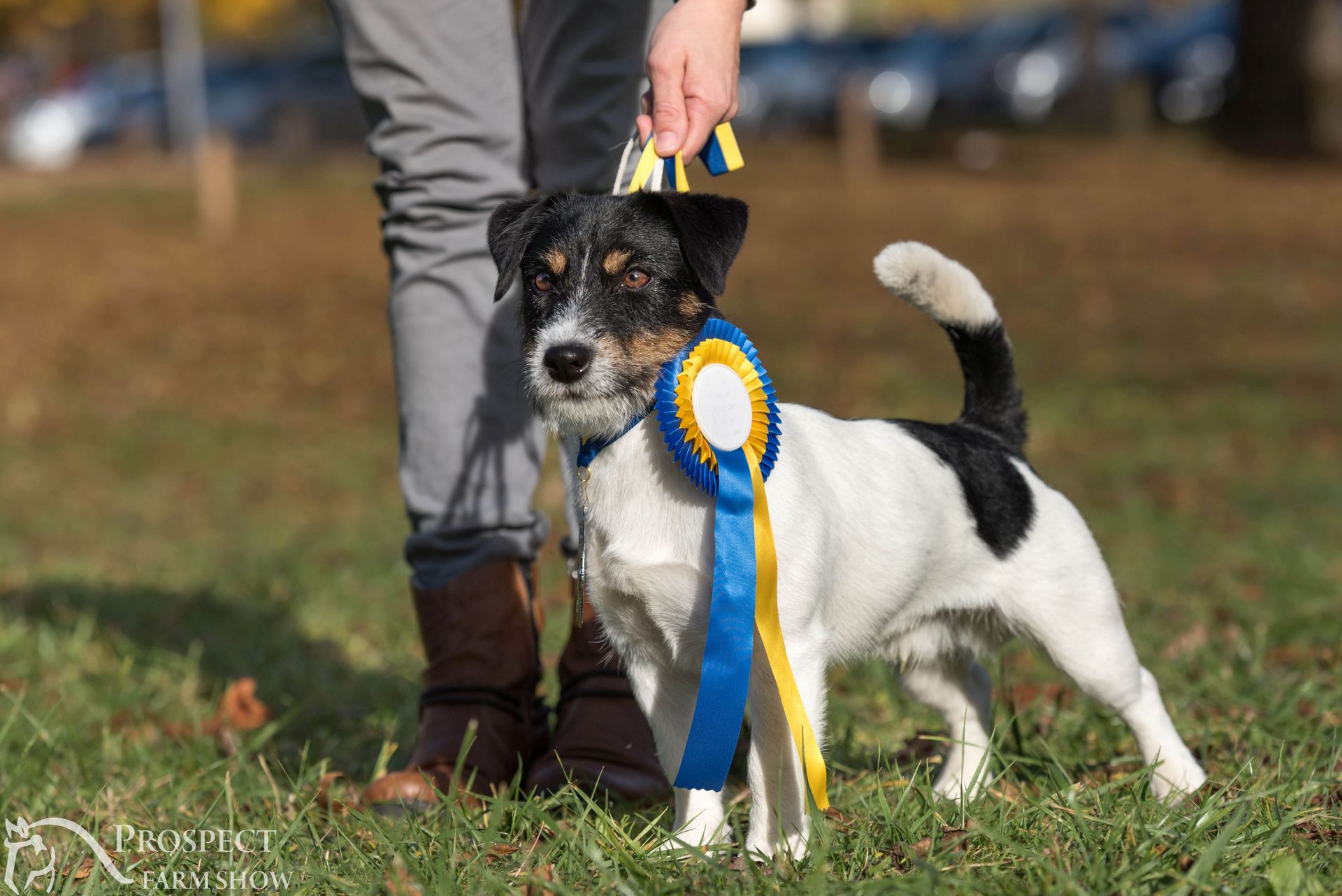
Our Dog Show is coming soon.

Already using what3words?

Find us using  

Find the Showground

Showground Entrance: ///splice.agreed.crass

Show Field Entrance: ///shower.during.exit

If you want to use the what3words App you can download it from their website below.

Download

Important: Your acknowledgement of show entry, rules and regulations.

Show Entry.

YOU HERBY ACKNOWLEDGE that before completing any entries to any shows hosted by Prospect Farm Show, that you have carefully read all the rules and regulations (as provided here on this website in a downloadable PDF document or in printed format upon request). You understand that the organisers of Prospect Farm Show have no liability to you for any accident, injury, damage, theft, illness, disease or other loss occurring to my property or animals at any time. You confirm that you have in place third-party insurance cover for the participation at Prospect Farm Show, shows and all events. You confirm all  your animals on the showground are up to date with injections and are fit and healthy (this accounts for any pets, such as dogs, etc). 

Missing Classes/Wrong Class

All Show officials and the show team will NOT be held responsible for competitors missing classes. It is the responsibility of the individual competitor to inform the show team, the steward and judge in the ring that you are currently in and the one you should be in to confirm if you can leave the ring and move to your next class. No refunds will be given for missed or unattended classes. If a competitor wishes to change classes either before or on show day, there will be a £5 admin fee. You are aware that you must comply with any additional rules or regulations, as enforced by the show officials, judges, stewards and qualifiers on or before show day.

Connect with us

Like and Follow us on social media